
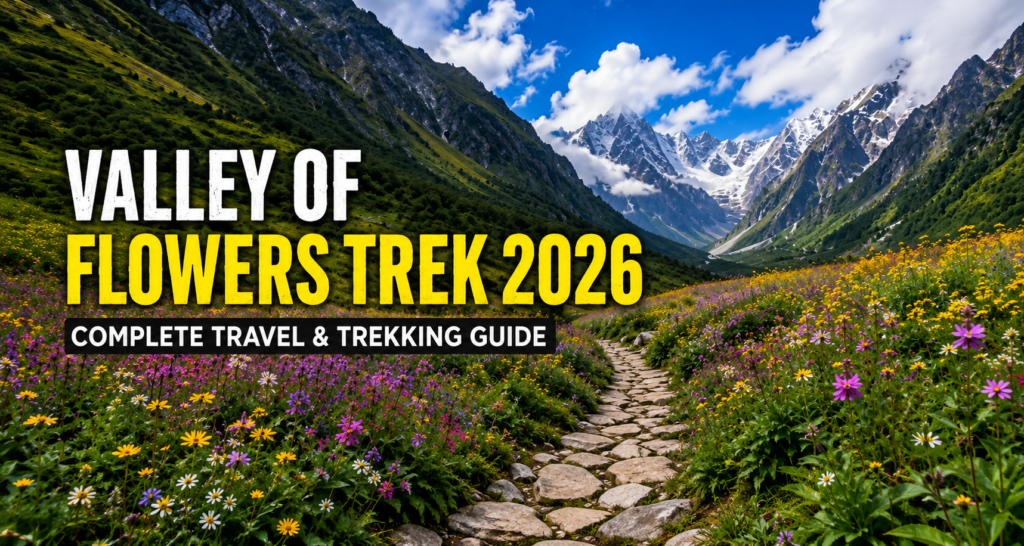
If you are looking for a Himalayan trek that combines beautiful landscapes, colourful alpine flowers, waterfalls, mountain views, and a peaceful trekking experience, the Valley of Flowers Trek 2026 deserves a place on your travel list.
Located in the Chamoli district of Uttarakhand, the Valley of Flowers National Park is one of India’s most famous high-altitude destinations. During the monsoon season, the valley transforms into a colourful landscape filled with alpine flowers. It is also part of the Nanda Devi and Valley of Flowers UNESCO World Heritage Site.
Unlike many Himalayan treks that focus mainly on reaching a summit or high mountain pass, the Valley of Flowers is more about enjoying nature along the trail. The route takes you through forests, streams, waterfalls and open meadows before reaching the famous flower-filled valley.
If you are planning the trek in 2026, this guide covers everything you need to know, including the best time to visit, route, itinerary, permits, difficulty, cost, packing list, safety tips and nearby attractions.
Valley of Flowers Trek 2026 at a Glance
| Detail | Information |
| Location | Chamoli, Uttarakhand |
| Nearest Trek Base | Ghangaria |
| Roadhead | Govindghat / Pulna |
| Valley Altitude | Around 3,600 metres |
| Trek Difficulty | Easy to Moderate / Moderate |
| Best Time | Mid-July to Mid-August for peak bloom |
| Trek Duration | Around 5–6 days including travel |
| Main Attractions | Alpine flowers, waterfalls, mountains and meadows |
| Nearby Attraction | Hemkund Sahib |
| Trekking Season | June to October |
| Overnight Stay | Ghangaria; overnight stay is not allowed inside the national park |
The official Uttarakhand Tourism website identifies Govindghat as the starting point for the trek and Ghangaria as the last inhabited settlement on the route to both Valley of Flowers and Hemkund Sahib.
Why Is Valley of Flowers So Special?
The first thing that makes the Valley of Flowers different is its seasonal transformation.
For much of the year, the high-altitude valley remains covered in snow and is inaccessible. When the snow melts and the monsoon arrives, the landscape begins to turn green. Flowers gradually appear across the meadows, creating the colourful scenery for which the valley is famous.
More than 500 species of alpine flowers have been documented in the region. Depending on the season, trekkers may see flowers such as blue poppies, primulas, Himalayan bellflowers, cobra lilies and Brahma Kamal.
The valley is also part of a protected ecosystem, so the experience is not simply about trekking. Visitors are entering a fragile natural environment where responsible tourism is extremely important.
When Does Valley of Flowers Open in 2026?
The Valley of Flowers National Park opened for the 2026 season on June 1.
Current 2026 reports indicate that the visitor season is expected to continue until October 31, 2026. However, weather, trail conditions and local administrative decisions can affect access, so travellers should check the latest official information before starting the journey.
The opening date does not mean that June is automatically the best month for flowers. The landscape changes considerably throughout the season.
Valley of Flowers Season Month by Month
June:
The valley is beginning to wake up after winter. You may find snow patches and early flowers, while the number of visitors is comparatively lower.
Early July:
The valley becomes greener and more flowers begin appearing. Rain also becomes more common.
Mid-July to Mid-August:
This is generally considered the best period for the classic Valley of Flowers experience. Flower diversity is at its peak, although monsoon rain can make trekking more challenging.
Late August to September:
The valley remains beautiful, with late-season flowers and comparatively fewer visitors. Weather conditions may also gradually improve.
October:
The landscape starts changing as the flowering season comes to an end. Clear mountain views can be attractive, but this is not the ideal period if flowers are your main reason for visiting.
How to Reach Valley of Flowers
The journey usually begins from Rishikesh or Haridwar, from where travellers travel by
road towards Govindghat.
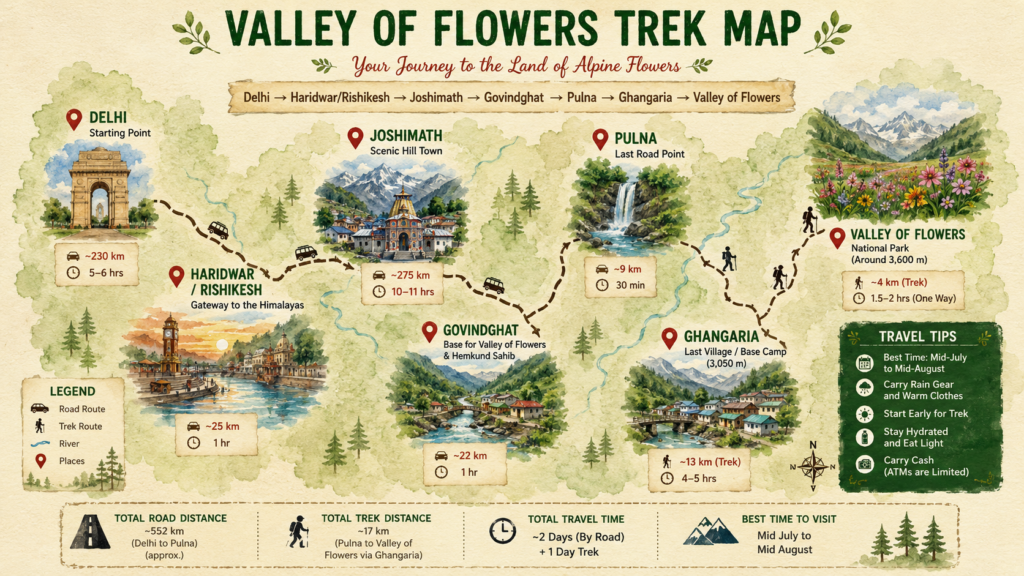
A typical route looks like this:
Delhi → Haridwar/Rishikesh → Joshimath → Govindghat → Pulna → Ghangaria → Valley of Flowers
Step 1: Reach Rishikesh or Haridwar
Rishikesh and Haridwar are convenient starting points because they have good road and transport connectivity with other parts of India.
Step 2: Travel to Govindghat
From Rishikesh, the road journey towards Govindghat takes you through the mountain roads of Uttarakhand. Joshimath is an important stop along the way.
Govindghat is the traditional gateway to the Valley of Flowers and Hemkund Sahib route.
Step 3: Govindghat to Ghangaria
From Govindghat, travellers continue towards Pulna and then trek towards Ghangaria.
Ghangaria sits at around 3,050 metres and serves as the main base for exploring the Valley of Flowers. Uttarakhand Tourism describes it as the last human habitation on the route to the Valley of Flowers and Hemkund Sahib.
Step 4: Ghangaria to Valley of Flowers
From Ghangaria, the actual Valley of Flowers trail begins. The route takes you through forests, streams and mountain scenery before entering the open valley.
The Valley of Flowers section is generally considered easier than the Hemkund Sahib climb, but the combination of distance, altitude and monsoon weather still requires reasonable fitness.
Valley of Flowers Trek Itinerary
A comfortable trip normally takes around 5–6 days, depending on your starting point and whether you include Hemkund Sahib.
Day 1: Rishikesh/Haridwar to Govindghat
Start your mountain journey towards Govindghat. Depending on your travel plan, you can stay at Govindghat or continue according to your trekking package.
Day 2: Govindghat/Pulna to Ghangaria
This is one of the more physically demanding parts of the journey because you gain considerable altitude while walking for several hours.
Take your time rather than trying to complete the trail quickly. Stay hydrated and take regular breaks.
Spend the night at Ghangaria.
Day 3: Ghangaria to Valley of Flowers
This is the day most trekkers look forward to.
Start early and walk towards the national park. Once inside the valley, you can enjoy the alpine meadows, flowers, waterfalls, streams and surrounding Himalayan peaks.
Take your time to explore instead of rushing through the trail. Return to Ghangaria by evening.
Day 4: Ghangaria to Hemkund Sahib
Hemkund Sahib is a popular addition to the Valley of Flowers trip.
Located at a much higher altitude, the route is considerably steeper and more physically demanding than the Valley of Flowers trail. If you are not comfortable with the altitude or steep climb, you can skip this section.
Return to Ghangaria after visiting Hemkund Sahib.
Day 5: Ghangaria to Govindghat
Descend towards Govindghat and continue your journey towards Joshimath or another planned destination.
Day 6: Return Journey
Depending on your itinerary, use the final day for travelling back towards Rishikesh/Haridwar or visiting nearby destinations.
How Difficult Is the Valley of Flowers Trek?
The Valley of Flowers Trek is generally considered easy to moderate or moderate, depending on the itinerary and weather conditions.
You do not need technical mountaineering skills, but that does not mean the trek is effortless.
The main challenges are:
- Long walking distances
- Continuous uphill sections
- High altitude
- Monsoon rain
- Slippery surfaces
- Changing weather
- Physical fatigue
The Hemkund Sahib section is significantly more demanding because of the steep climb and higher altitude.
If you are a beginner, start preparing at least a few weeks before the trip. Regular walking, stair climbing and basic cardio can make a noticeable difference.
Valley of Flowers Permit and Entry Rules
Because the Valley of Flowers is a protected national park, visitors need to follow the entry and conservation rules set by the authorities.
Registration and tourism information are available through the official Uttarakhand Tourist Care system.
Before travelling, check:
- Current permit requirements
- Entry timings
- Applicable fees
- Daily visitor restrictions
- Weather-related closures
- Identification requirements
If you are travelling through a trekking operator, confirm whether permits and forest-related fees are already included in your package.
Most importantly, overnight camping inside the Valley of Flowers is not allowed. Ghangaria is used as the base for visiting the national park.
What Should You Pack?
Packing correctly becomes particularly important because the best flowering season overlaps with the monsoon.
Essential Items
Waterproof trekking shoes:
The trail can become wet and slippery during rain.
Rain jacket and waterproof layers:
Do not depend on a small umbrella. A proper waterproof jacket is much more practical.
Warm clothes:
Temperatures can drop considerably at higher elevations, particularly in the morning and evening.
Trekking poles:
These can provide additional stability on steep or slippery sections.
Backpack:
Carry a comfortable daypack rather than a very heavy bag.
Water bottle:
Stay hydrated throughout the trek.
Sunscreen and sunglasses:
UV exposure can still be strong at high altitude, even when the weather is cloudy.
Basic medicines and personal medication:
Carry any medicines you normally need, along with basic first-aid supplies.
Power bank:
Mobile connectivity and electricity can be limited in mountain areas, so carrying backup power is useful.
Also carry some cash because facilities such as ATMs and digital payment options may not always be reliable in remote mountain areas.
Valley of Flowers Trek Cost
The total cost depends on how you travel.
A budget trip can include:
- Transportation from Rishikesh/Haridwar
- Accommodation
- Food
- Local transfers
- Permits and entry charges
- Trekking support
- Optional pony/palanquin services
- Additional sightseeing
Trekking packages for 2026 vary significantly depending on inclusions, accommodation and transportation. Some current packages are advertised around the ₹8,500–₹9,000 range, while other packages can cost considerably more depending on services included.
Instead of choosing a package only because it is cheap, check exactly what is included.
Is Valley of Flowers Safe During Monsoon?
Yes, people regularly visit during the monsoon because this is when the valley looks its best. But monsoon trekking requires extra caution.
Rain can make trails slippery and can affect mountain roads. Weather conditions can also change quickly.
For a safer experience:
- Start your trek early.
- Avoid rushing.
- Wear proper waterproof footwear.
- Follow instructions from local authorities and guides.
- Do not enter restricted areas.
- Avoid travelling during severe weather warnings.
- Keep your phone and important documents protected from water.
- Do not ignore signs of altitude sickness.
If you experience severe headache, dizziness, vomiting, confusion or unusual breathing problems at altitude, inform your guide immediately and avoid continuing higher until you are assessed.
Valley of Flowers or Hemkund Sahib: Should You Visit Both?
If your fitness and schedule allow it, combining both is a great option.
The two destinations offer completely different experiences.
Valley of Flowers is about alpine meadows, flowers, waterfalls and natural landscapes.
Hemkund Sahib offers a high-altitude spiritual experience surrounded by dramatic Himalayan scenery.
However, do not try to combine both into one extremely long day simply to save time. Keeping separate days is more comfortable and allows you to enjoy both places properly.
Other Places to Visit Nearby
One advantage of planning a Valley of Flowers trip is that several important destinations are located along or near the same route.
Badrinath
Badrinath is one of the most important pilgrimage destinations in Uttarakhand and can be added to a Valley of Flowers itinerary depending on road and weather conditions.
Mana Village
Mana is located beyond Badrinath and is known for its high-altitude Himalayan setting and traditional village character.
Joshimath
Joshimath is an important mountain town and a common overnight stop for travellers heading towards Govindghat.
Hemkund Sahib
For many visitors, Hemkund Sahib is the most meaningful addition to the Valley of Flowers journey because of its religious and high-altitude significance.
Responsible Tourism in Valley of Flowers
The beauty of Valley of Flowers also makes it environmentally sensitive.
When visiting, remember that you are travelling through a protected ecosystem.
Follow simple rules:
- Do not pluck flowers.
- Do not leave plastic or food waste behind.
- Stay on designated trails.
- Avoid disturbing wildlife.
- Do not play loud music.
- Carry reusable bottles where possible.
- Follow instructions from forest officials.
- Avoid damaging plants or collecting natural objects.
The goal should be to leave the valley exactly as you found it.
Final Thoughts
The Valley of Flowers Trek 2026 is not just another Himalayan trekking route. It is a seasonal experience that changes every few weeks.
If your main goal is to see the valley at its most colourful, plan your trip around mid-July to mid-August. Be prepared for rain, slippery trails and changing mountain weather, but the reward is a landscape that is difficult to experience anywhere else.
For first-time trekkers, the route offers a good introduction to high-altitude Himalayan trekking without requiring technical climbing skills. With proper fitness, suitable clothing, early starts and responsible travel habits, it can become one of the most memorable trips of your life.
Before booking, always verify the latest opening/closing dates, permits, entry rules, weather conditions and road status through official Uttarakhand sources, because conditions in the Himalayas can change quickly.
If you are planning Valley of Flowers in 2026, choose your dates carefully, prepare for the monsoon and give yourself enough time to actually enjoy the journey. The flowers may be the destination, but the mountains, forests, rivers and small moments along the way are what make the trek truly special.