
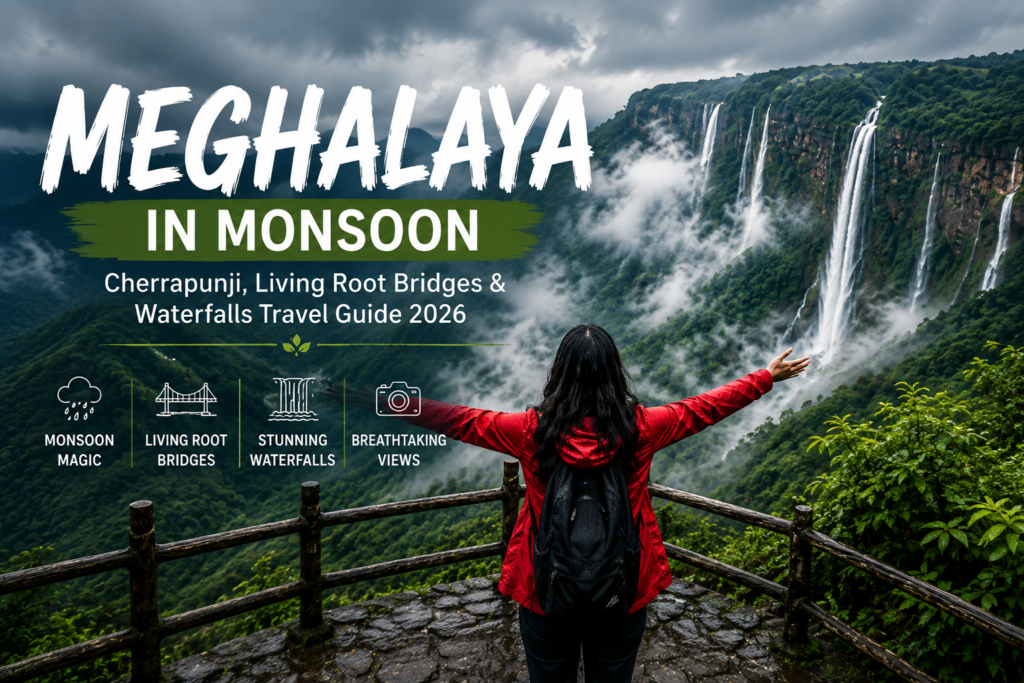
Experience the Magic of India’s Rainiest State
People usually plan their vacations when the sun is out. Meghalaya is one place where the rain is actually the main reason people go there. When it is monsoon season, this beautiful state in Northeast India, which is called the Abode of Clouds, becomes a green paradise.
The hills are hidden behind clouds that are moving; the waterfalls are very loud and powerful. The old living root bridges look even more amazing because they are surrounded by very green forests. If you have ever wanted to see nature, you should think about going to Meghalaya during monsoon season. Meghalaya is a place to visit.
You can see the beautiful views in Cherrapunji and the famous Double Decker Living Root Bridge, and you can also see rivers that are very clear and waterfalls that are hard to find.
Every part of Meghalaya is special. Will be a trip you will never forget. A Meghalaya monsoon trip is something you should do.
This is a comprehensive travel guide that covers all aspects of Meghalaya, from the best time to visit, top attractions, a suggested itinerary to help plan your tour, the cost of travel to Meghalaya, essential packing tips, and safety advice that you might need to plan a memorable tour in 2026.
Best Time to Visit Meghalaya in Monsoon
The monsoon period normally lasts from June to September, but the amount of rainfall differs in these months.
June
The beginning of rains comes along with the increased activity of waterfalls and fairly good road conditions. This month is ideal for those tourists who are seeking good weather conditions with moderate rains.
July and August
This is the rainiest season of the year when waterfalls reach the peak of their activity, forests become extremely green, and clouds form impressive landscapes. In case your desire is to admire the nature of Meghalaya at its best, this time is perfect for you.
September
In this month, there is a gradual decrease in rainfall, but landscapes are still beautiful and green. September can be called a month of a nice combination of pleasant weather and impressive nature.
Weather during monsoon season is quite cool, as temperature ranges between 18°C and 24°C.
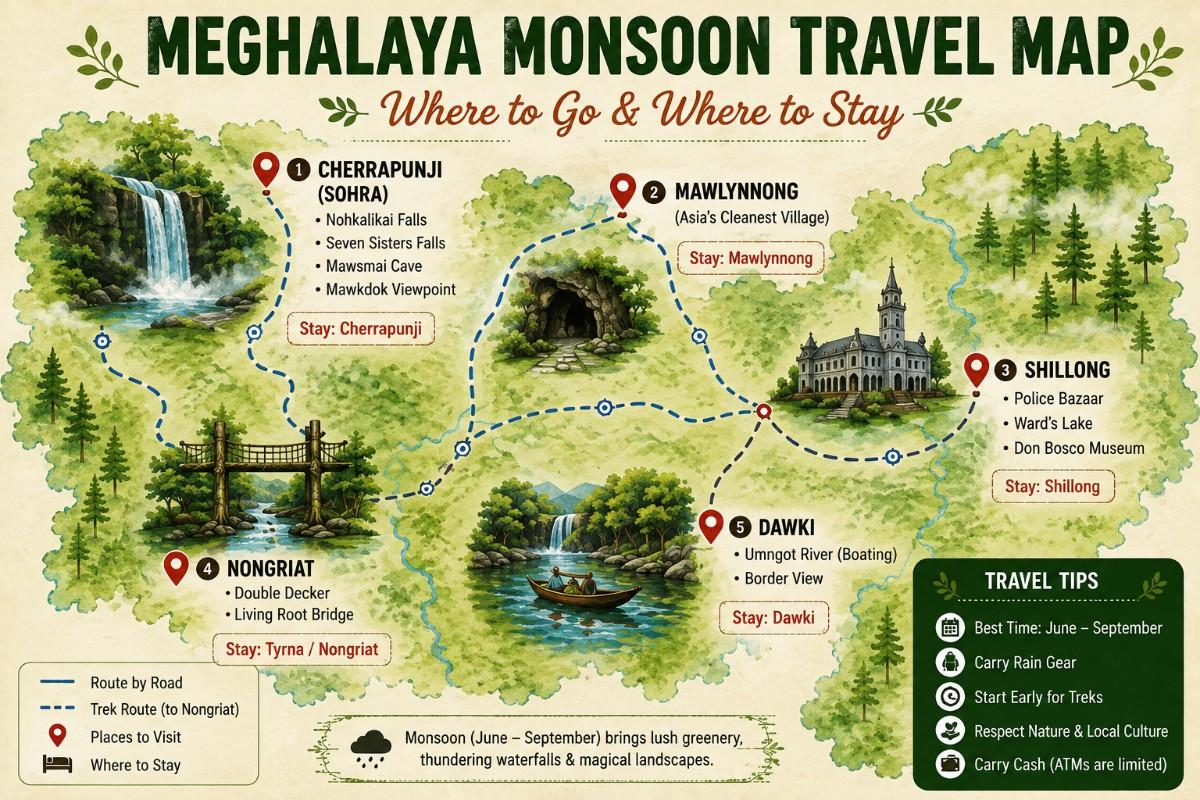
Top Places to Visit in Meghalaya During Monsoon
Sohra (Cherrapunji)
Sohra, or Cherrapunji as it’s commonly called, must-visit destination on every Meghalaya tour package. Famously recognized for experiencing world’s highest rainfall, it is a wonderland of waterfalls, viewpoint, caves and beautiful scenery.
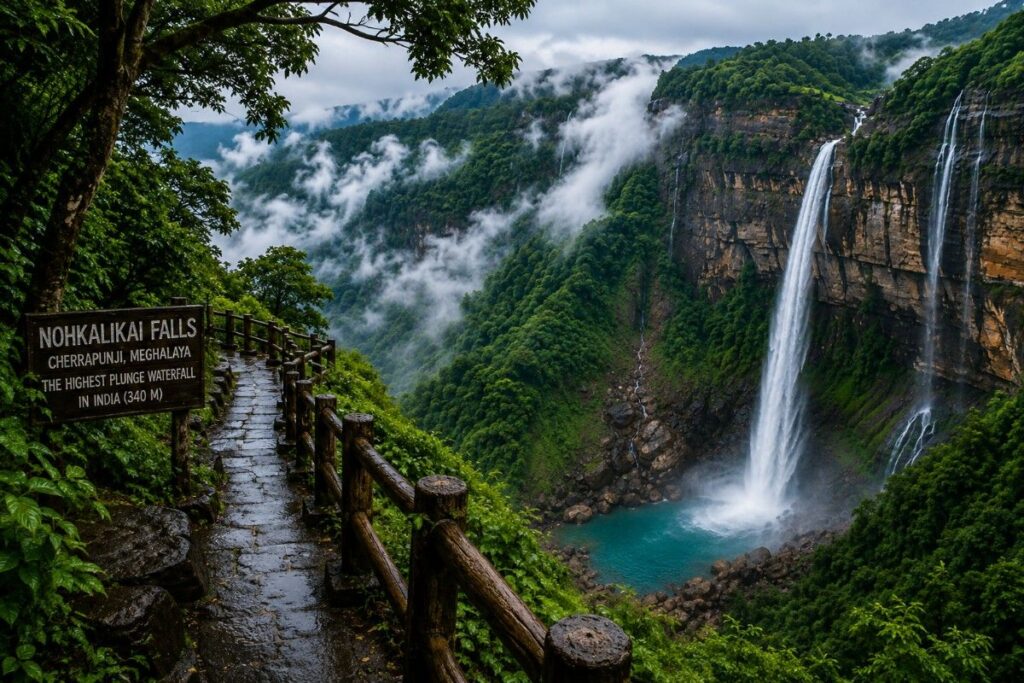
Nohkalikai falls
Nohkalikai is the highest plunge waterfall in India, with the water plunging from over 340 meters from a height. This waterfall gushes to fullness during the monsoon time with the water plummeting on the verdant plunge pool below.
This viewpoint looks extraordinary in the early morning hours when clouds drift up the valley.
Seven sisters Falls
Locally known as Nohsngithiang Falls, this magnificent waterfall features a cluster of waterfalls running parallel from a high cliff. The 7 falls that the waterfall is known for are at their full glory when the rainfall is heavier than usual.
Mawsmai Cave
For those of you who wish to explore caves, Mawsmai Cave is the one you can put on the itinerary. This limestone cave features tight passages, rock formations and skylights dating to thousands of years. This is a relatively safe and easy cave to explore.
Mawkdok Dympep Valley Viewpoint
This is situated on your way to Cherrapunji. You will be awestruck by the vistas of deep forests, valleys and floating clouds! It’s a delight to adventurous people as there are options for ziplining and trekking along with amazing views of the adjoining hills.
Living Root Bridges – Meghalaya’s Natural Wonder
The Living Root Bridges are one of the most appealing aspects of Meghalaya.
Unlike other conventional bridges that are made from materials like steel and concrete, these amazing structures are developed using the aerial roots of rubber fig trees that are trained across the rivers.
These roots take many years to develop into strong bridges that can support people walking on them. It is estimated that some of these bridges are more than 100 years old, and they are getting even stronger each year.
Apart from being great feats of engineering, the bridges reflect the close relationship between the Khasi communities and nature. Among these bridges, the Double Decker Living Root Bridge in the village of Nongriat is the most famous one.
Double Decker Living Root Bridge (Nongriat)
Double Decker Living Root Bridge (Nongriat)
The Double Decker Living Root Bridge is the most visited place in Meghalaya. It is located in the Nongriat Village and is a double-tiered living root bridge – quite an unusual and rare example of nature.
Arrival at this bridge becomes an exciting experience because it requires walking down approximately 3,500 stone stairs passing through thick forest, waterfalls, and little villages.
Trek Details
Starting point: Tyrna Village
Distance: 3 km each way
Stairs: 3,500 each way
Duration: 4-6 hours round-trip
Difficulty: Moderate-Difficult
Despite its difficulty, the hike will definitely pay off because clear streams, hanging bridges, and unspoiled forests provide a very interesting hiking
The Best Time to Start the Trek
Starting early at 7:00 AM would be ideal. Doing this will ensure that you don’t have to crowd up in places and have sufficient light to make it back on time.
After reaching the bridge, you can also proceed ahead to Rainbow Falls, where the water is blue and there is some good scenery.
Living Root Bridge of Riwai
If you wish to travel to a Living Root Bridge without having to trek for hours on end, then the Living Root Bridge of Riwai should definitely be your destination.
The Riwai Root Bridge is located near Mawlynnong Village, close to the parking area, making it perfect for families, elders, and people with limited time.
Explore Dawki and the Crystal-Clear Umngot River
Dawki, an ideal escape to Meghalaya:
This is a popular destination located at the India-Bangladesh border. The town is best known for the Umngot river which is touted to be one of the clearest river in India.
In the winter it looks so clear that the boats appear to be floating in the air, not a water surface in site. But even in monsoon, this place never disappoints.
The emerald water amidst the verdant green hills, fresh mountain breeze and trickling water here is such an atmosphere that photographers of all kinds visit every year from different corners of the world to admire this beauty.
Things to do at Dawki:
- Boat ride on the Umngot River.
- Take photos of the stunning beauty.
- Relaxing on the riverside.
- Grab some local delights from riverside stalls.
- View the border from the viewpoint.
Shillong – The Heart of Meghalaya
Also called the ‘Scotland of the East,’ Shillong is the state capital of Meghalaya and is the ideal place to begin your journey into some amazing sites.
Shillong is a combination of natural beauty, with modern cafés, markets, colonial-style architecture, and culture in one place.
Below is a list of some great tourist attractions in the area:
- Elephant Falls
A three-tiered waterfall near the city centre.
- Umiam Lake
One of the most attractive lakes in Meghalaya; a great place for boat riding and photography.
- Shillong Peak
The highest peak in the city from where you can enjoy the view of the entire city and hills.
- Laitlum Canyon
This canyon is the most amazing viewpoint in the whole of Meghalaya, especially during the monsoon when fog rolls all over the valley.
Suggested 6-Day Meghalaya Monsoon Itinerary
Taking out time to plan your itinerary well makes you cover a lot of things without missing the major highlights.
Day 1 of itinerary –
- Reach at Guwahati Airport.
- Drive till Shillong.
- Explore cafes at Local cafs, Police bazaar etc.
Day 2 of itinerary –
- Cover the elephant falls.
- Proceed to Shillong Peak and discover views from it.
- Drive till Cherrapunji.
- Watch sunset from Cherrapunji viewpoints.
Day 3 of itinerary –
- cover up nuskalika fall.
- Explore 7 sisters falls.
- Visit Mawsmai caves.
- Overnight stay at Cherrapunji.
Day 4 of itinerary –
- trekk to doubledecker living root bridge.
- Optional: Trek up to rainbow falls.
- Drive back to cherrapunji.
Day 5 of itinerary –
- Drive to Dawki.
- Go to Umngot River boating.
- Visit Mawlynnong village and visit Riwai living root bridges.
- Drive back to Shillong.
Day 6 of itinerary –
Visit lake Umiam and finally drive back to Guwahati in order to take your further journey back home or at next stop.
Estimated Budget for a Meghalaya Monsoon Trip
The overall cost varies a lot according to your way of travel, the place you stay and the transport you choose. However, a rough figure can be calculated on the basis of a comfortable stay for 6 days.
| Expense | Estimated Cost |
| Hotels | ₹10,000–18,000 |
| Food | ₹3,000–5,000 |
| Private Cab | ₹12,000–18,000 |
| Local Sightseeing | ₹2,000–4,000 |
| Miscellaneous | ₹3,000–5,000 |
Total estimation: 35000-55000 per person.
Travelling in a group is better as taxi fare is distributed in travelers traveling together.
What to Pack for Meghalaya During Monsoon
Smart packing can be a great way to ensure a more pleasant experience during your Meghalaya trip, especially in the rainy season. Since the weather can change rapidly, a few items would make sure that you won’t have any kind of inconvenience at all on your entire trip:
- A waterproof rain jacket or poncho
- Comfortable trekking shoes that offer good grip on roads and trails
- Quick-dry clothes and a spare change for each destination
- A waterproof cover for your backpack
- Valid government-issued ID proof
- Your personal medicines and a small first-aid kit
- Power bank and mobile charger
- A reusable water bottle
- Sunscreen and an insect repellent
- Some cash, essential for purchases in small shops and local transport
Digital payment options might be accessible in big towns, but in remote regions and villages, the system of cash still predominates. Mobile network coverage might not be consistent throughout Meghalaya, so downloading offline maps would be a good idea before you reach Meghalaya.
Travel Tips for a Safe and Enjoyable Trip
Traveling to Meghalaya in the monsoon. Follow these tips for a fun and safe journey to explore more.
Start Early:
The climate of the hills changes from time to time. The early start will help you cover many spots before the dawn and reach your way back before evening without the hassle of traveling in the dark.
Wear the Right Footwear:
Many waterfalls, viewpoints and trekking paths have many steps made up of stones which are wet and slippery due to the rainfall. You have to wear shoes with a good grip to prevent slipping.
Hire a Local Driver:
If you are not accustomed to traveling on mountain routes, then the best is to hire a local driver, who is well acquainted with mountain routes and also know about the current condition of the roads during the monsoon season.
Respect Nature & Localities:
Meghalaya has got the title for clean India campaign and also you can see pristine and clear water all along. Do not litter and always keep your environment neat and clean and the local peoples. Before taking pictures do ask for their consent.
Stay Updated With The Weather:
Due to heavy rainfall, there are always chances of change in routes and treks that’s way it is highly important to check out the weather at the destination before heading for trekking and long treks.
Book Your Stay:
During monsoons usually, there are fewer tourists than winter but few popular hotels and homestays which are located in Cherrapunji, Shillong and other popular places might be all booked especially during weekends and holidays. So booking an accommodation at first hand will be very beneficial for you.
Final Thoughts
A Meghalayan monsoon journey will leave you utterly unlike any other journey in India. The rain lends spirit and life to the landscape and all is converted into a kingdom of waterfalls, misty mountains, jungle-clad hills and living root bridges that stand as proof to coexistence of nature and human effort.
From the sheer awe of the Nohkalikai falls to the lush-green expedition of the Double Decker Living root bridge, to drifting in the waters of the Umngot river to the mesmerising drift of clouds from the skies of Meghalaya’s capital, Shillong, there’s not a single moment of despair and every journey here is nothing less than a fairytale.
With a well-planned visit, necessary rainfall essentials and an open mind, one can still enjoy Meghalaya in its most beautiful form. Embrace the rain, instead of running away and you’ll find out why this place has its name, “Abode of Clouds”. So if you seek an experience encompassing breathtaking views, exciting expeditions, incredible culture and an endless collection of memories, Meghalaya during monsoon must be at the forefront of your 2026 travel plans.