
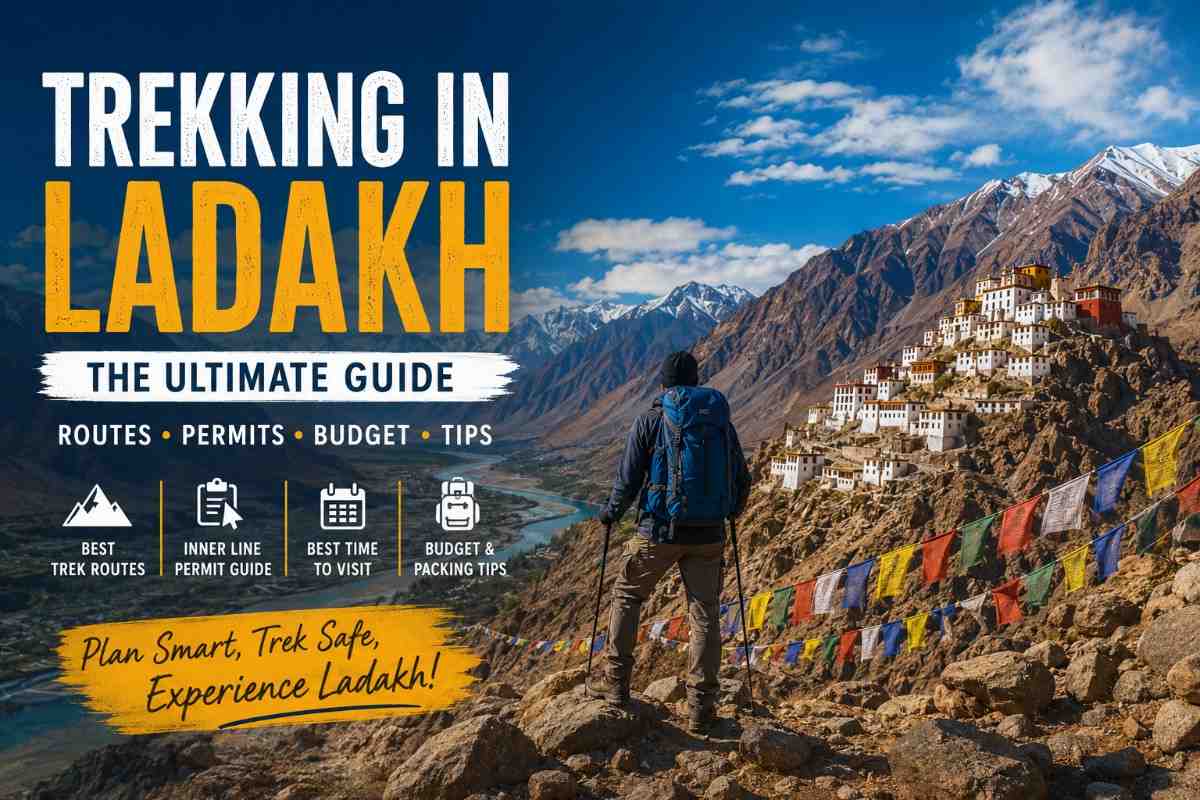
Ladakh is not just another travel destination—it’s an entirely different world. From its high-altitude cold desert and ancient monasteries perched dramatically on cliffs to breathtaking trails that pass through some of the most spectacular landscapes on Earth, Ladakh offers an unforgettable trekking experience. Whether you’re planning your first Himalayan trek or you’re an experienced trekker looking for a greater challenge, there’s a trail here for every skill level.
In this guide, we’ll cover the best trekking routes, the Inner Line Permit (ILP) process, the ideal trekking season, an approximate budget, and a practical packing checklist to help you prepare.
Table of Contents
Quick Facts
- Best Season: June – September (Winter routes like the Chadar Trek are best from January to February)
- Difficulty Level: Easy (Sham Valley Trek) to Difficult (Stok Kangri)
- Ideal Trek Duration: 4–12 days (depending on the route)
- Nearest Airport: Kushok Bakula Rimpochee Airport, Leh
- Acclimatization: Spend at least 2 days in Leh before starting any trek to reduce the risk of altitude sickness.
Best Trekking Routes in Ladakh
1. Markha Valley Trek
The Markha Valley Trek is Ladakh’s most popular trekking route and is suitable for both beginners and intermediate trekkers. The trail passes through Hemis National Park, offers stunning views of Kang Yatse Peak, and takes you through traditional Ladakhi villages where you can stay in local homestays.
- Duration: 7–9 days
- Difficulty: Moderate
- Highlight: Crossing Kongmaru La Pass (5,150 m)
2. Chadar Trek (Frozen Zanskar River)
The Chadar Trek is a winter-exclusive adventure where trekkers walk across the frozen surface of the Zanskar River. With extremely low temperatures and unique surroundings, it is considered one of the most extraordinary trekking experiences in India.
- Duration: 8–9 days
- Difficulty: Difficult (Extreme Cold Conditions)
- Best Time: Mid-January to Mid-February
3. Sham Valley Trek (“Baby Trek”)
Often called the “Baby Trek” of Ladakh, this route is perfect for first-time trekkers, families, and anyone looking for a relaxed trekking experience. It features lower altitudes, gentle trails, and shorter daily walking distances.
- Duration: 3–4 days
- Difficulty: Easy
- Highlights: Likir and Alchi Monasteries
4. Stok Kangri (Currently Restricted)
Once Ladakh’s most famous trekking peak, Stok Kangri is currently restricted due to environmental conservation concerns. If you’re planning to include it in your itinerary, make sure to verify its latest status with local trekking agencies or the Ladakh Administration, as regulations may change from season to season.
Inner Line Permit (ILP): What You Need to Know
Several areas in Ladakh, including Nubra Valley, Pangong Tso, and other border regions, require an Inner Line Permit (ILP) because they fall within protected or sensitive zones.
How to Apply
- Apply online through the official Ladakh Tourism portal, or
- Obtain it through the Deputy Commissioner’s Office in Leh or a registered travel agency.
Required Documents
- Valid government-issued ID (Aadhaar Card or Passport)
- Passport-size photograph
Processing Time
Typically same day or within 1–2 working days.
Important: Permit fees, required documents, and the application process may change periodically. Always verify the latest information on the official Ladakh Tourism website before your trip.
Foreign nationals may also be subject to additional restrictions, including group travel requirements and access limitations in certain protected areas. It is advisable to check the latest regulations before planning your trek.
Best Time to Visit Ladakh
| Season | Months | What to Expect |
|---|---|---|
| Peak Summer | June – August | Most trekking routes and mountain passes are open. Pleasant daytime temperatures and ideal trekking conditions. |
| Early Autumn | September | Fewer tourists, crystal-clear skies, and cool but comfortable weather. |
| Winter | December – February | Chadar Trek season with extremely cold temperatures. Recommended only for experienced trekkers. |
| Spring | March – May | Many high-altitude trekking routes remain snow-covered and inaccessible. |
Approximate Budget Breakdown
The following estimates provide a rough idea of your trekking expenses. Actual costs will vary depending on your chosen route, trekking agency, and group size.
- Guide & Porter: Request current daily rates from registered local trekking agencies.
- Permits: Nominal fees that vary depending on the trekking route.
- Gear Rental: Sleeping bags, trekking poles, and other equipment are easily available for rent in Leh.
- Accommodation: Budget homestays along trekking routes and a wide range of hotels in Leh.
For the most accurate pricing, obtain quotations directly from local registered trekking operators, as rates can change based on the season, demand, and transportation costs.
Essential Packing Checklist
- Layered clothing (thermal base layer, fleece jacket, and waterproof/windproof outer shell)
- Sturdy trekking boots (well broken-in; avoid brand-new shoes)
- Sleeping bag suitable for sub-zero temperatures
- Sunscreen and UV-protection sunglasses (high-altitude sunlight is extremely intense)
- Basic altitude sickness medication (after consulting your doctor)
- Reusable water bottle and water purification tablets
- Power bank (cold temperatures drain batteries much faster)
Safety & Acclimatization Tips
- Spend at least two days in Leh before beginning your trek to allow your body to adjust to the altitude. Acute Mountain Sickness (AMS) is one of the most common issues faced by first-time visitors.
- Follow the principle of “Climb High, Sleep Low” whenever possible.
- Stay well hydrated by drinking more water than usual.
- If you experience symptoms such as persistent headache, nausea, dizziness, or shortness of breath, avoid gaining further altitude and consider descending immediately.
- Always trek with a registered and experienced local guide, particularly on remote or high-altitude routes.
Final Thoughts
Ladakh offers some of the most rewarding trekking experiences in the Himalayas, combining breathtaking scenery, rich Buddhist culture, and unforgettable mountain adventures. Whether you’re exploring the scenic Markha Valley, walking across the frozen Zanskar River during the Chadar Trek, or enjoying the beginner-friendly Sham Valley Trek, proper planning, acclimatization, and preparation are the keys to a safe and memorable journey.
Before finalizing your itinerary, always check the latest permit regulations, weather conditions, and route status through official sources or registered local trekking operators to ensure a smooth trekking experience.